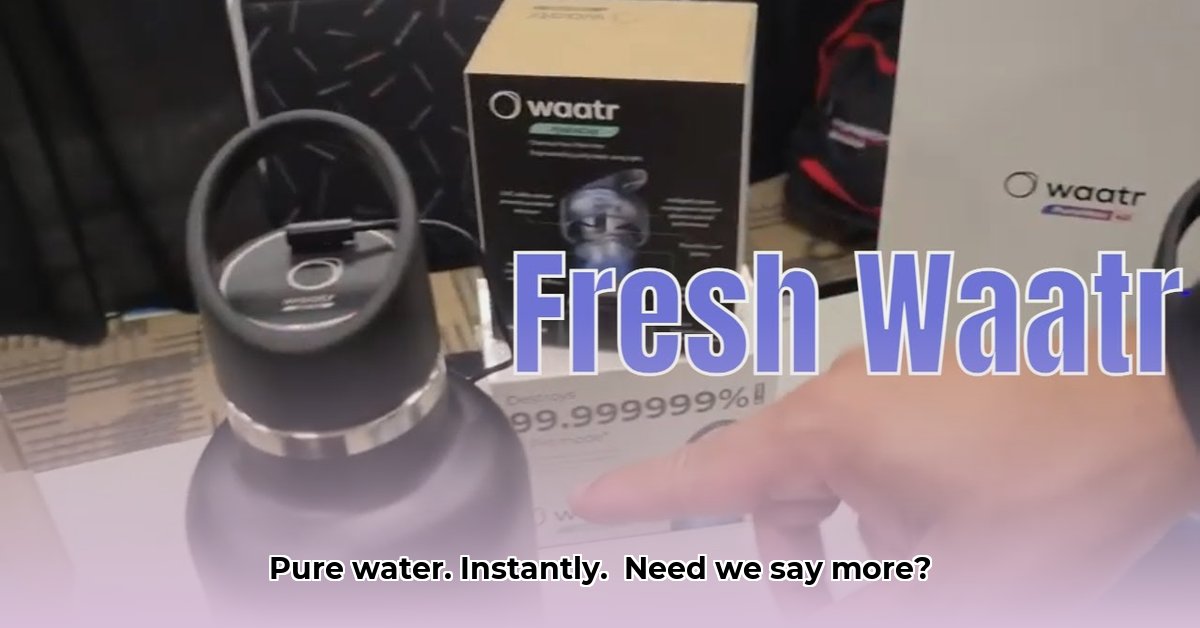
This technical report analyzes the WAATR HydroCap, a portable water purification device utilizing UV-C LED technology. We examine its functionality, efficacy, market competitiveness, and associated risks, providing a data-driven assessment of its potential. This report aims to be informative for both technical experts and the general public.
Product Description and Technology
The WAATR HydroCap is a water bottle cap incorporating two 20 mW UV-C LEDs for water disinfection. The LEDs are strategically positioned (exact arrangement proprietary) to maximize exposure and purification efficiency. A built-in self-cleaning mechanism, involving a 20-second UV-C cycle every hour, maintains LED cleanliness and extends device lifespan. A safety sensor prevents accidental UV-C exposure. The cap's effectiveness relies on the UV-C dosage delivered to the water, which is a function of the LED intensity, water flow rate, and water retention time within the cap. These crucial parameters are currently not publicly disclosed, limiting our full evaluation. While the manufacturer claims high efficacy, independent verification is required to confirm these claims.
Efficacy and Performance
The manufacturer claims a 99.999% kill rate for E. coli and a 94% reduction of NTM in a claimed "Pro Mode." These claims, however, lack independent verification from accredited third-party testing laboratories. While the UV-C technology is a proven method for water disinfection, the specific efficacy of the HydroCap remains unconfirmed. Further research is needed to validate these claims under various conditions, including different water turbidity levels, flow rates, and LED lifespan. The long-term performance and reliability of the LEDs also require further investigation. A crucial aspect needing investigation is the impact of water clarity on UV penetration, as this can significantly affect the efficacy of the treatment.
Market Analysis
The portable water purification market is highly competitive, with numerous products employing different technologies. The HydroCap's success hinges on establishing a clear unique selling proposition (USP) and identifying its target market. Currently, details regarding its competitive advantages over existing solutions are limited. Strategic partnerships, such as collaborations with organizations involved in disaster relief or outdoor recreation, could enhance market penetration. Additionally, a robust marketing strategy highlighting the HydroCap's specific benefits and addressing consumer concerns is vital for success.
Risk Assessment
Several key risks are associated with the WAATR HydroCap:
| Risk Factor | Likelihood | Impact | Mitigation Strategy |
|---|---|---|---|
| Purification Ineffectiveness | Moderate | High | Independent verification testing; transparent reporting of results; clear communication of limitations. |
| LED Failure | Moderate | Medium | Robust manufacturing; extended warranty; easily replaceable components; clear replacement instructions. |
| Market Competition | High | Medium | Differentiated marketing; unique features; strategic partnerships. |
| Regulatory Compliance Issues | Low | High | Proactive compliance; testing to meet international standards. |
| Battery Life/Charging Issues | Low | Low | Optimized power management; transparent information on battery lifespan and charging requirements. |
Regulatory Considerations
Compliance with international regulations for UV-C devices is crucial. These regulations vary significantly across markets, necessitating thorough testing and appropriate certifications. Non-compliance could result in product recalls, legal issues, and reputational damage. Proactive engagement with regulatory bodies and adherence to international standards are essential for global market access.
Conclusion
The WAATR HydroCap presents a potentially innovative approach to portable water purification. However, the absence of independent verification of its claimed efficacy remains a significant limitation. To gain market acceptance and build consumer trust, WAATR needs to prioritize independent testing to confirm its claims and transparently communicate the product's limitations. A well-defined marketing strategy targeting specific consumer needs and a proactive approach to regulatory compliance are also critical for long-term success in this competitive market. Future research should focus on the long-term performance of the UV-C LEDs and the impact of various water conditions on purification effectiveness. Only with rigorous testing and transparent communication can the HydroCap fulfill its promise of providing clean, safe water instantly.